A ready-made cushion can look fine on a shop shelf, yet leave awkward gaps, slide about or feel too thin once it is in place. Custom cushions solve the practical part of furnishing a compact home: they are made for the space you actually have, whether that is a narrowboat dinette, a bay-window seat, a breakfast nook or a built-in bench in a spare room.
For seating used every day, getting the size and filling right matters just as much as choosing a fabric you like. A well-made cushion should make a hard bench comfortable, support you properly and help a small area feel finished rather than improvised.
Why custom cushions are worth considering
Built-in seating is a sensible way to make more of limited floor space. It can provide a place to eat, work, relax or sleep, particularly in smaller lounges, kitchen-diners and guest rooms. The difficulty is that these spaces rarely match standard cushion sizes.
Custom-made cushions are designed around your measurements, including unusual angles, tapered ends and cut-outs around walls or fittings. This is especially useful for narrowboats, where every inch is valuable and seating often follows the shape of the cabin. It is also helpful for window seats and dinettes, where a neat fit makes storage beneath the seat easier to access.
There is a balance to strike. Made-to-order cushions take more planning than picking up a standard pad, and accurate measurements are essential. In return, you get seating that fits properly, looks considered and is more likely to stay comfortable over time.
Start with how the cushions will be used
Before choosing foam or fabric, think honestly about the job the cushions need to do. A decorative scatter cushion has very different requirements from a seat base used for family meals every day.
For a window seat used mainly for reading, comfort and a softer finish may be the priority. A dinette cushion may need firmer support because people sit upright for longer. On a narrowboat, durability, removable covers and practical fabric choices often matter more, as the cushions may be exposed to damp clothing, frequent use and tighter walkways.
If the seating will also form part of a guest bed, consider how the cushions work with the full sleeping arrangement. Deep, supportive foam can make a substantial difference, but the overall surface must be level and secure. A cushion that is excellent for sitting can be unsuitable for regular sleeping if it creates joins or uneven areas.
Seat cushions, back cushions and bolsters
Seat cushions need to carry the most weight, so they generally benefit from firmer, supportive foam. If the foam is too soft, the cushion may quickly feel flat and make a bench uncomfortable. If it is too firm, it can feel unforgiving, especially on a shallow seat.
Back cushions can usually be softer, as their purpose is to provide comfort rather than bear full body weight. Loose back cushions are flexible and easy to adjust, while fixed back cushions keep a tidier shape in a narrow space. Bolsters can add useful lumbar support without taking up the room of a full back cushion.
How to measure for custom cushions
Measuring carefully is the part that prevents disappointment. Take measurements from the finished seating base, not from an old cushion that may have compressed or stretched over time. Measure the width, depth and thickness required, then check each measurement in more than one place. Walls and fitted furniture are not always perfectly square.
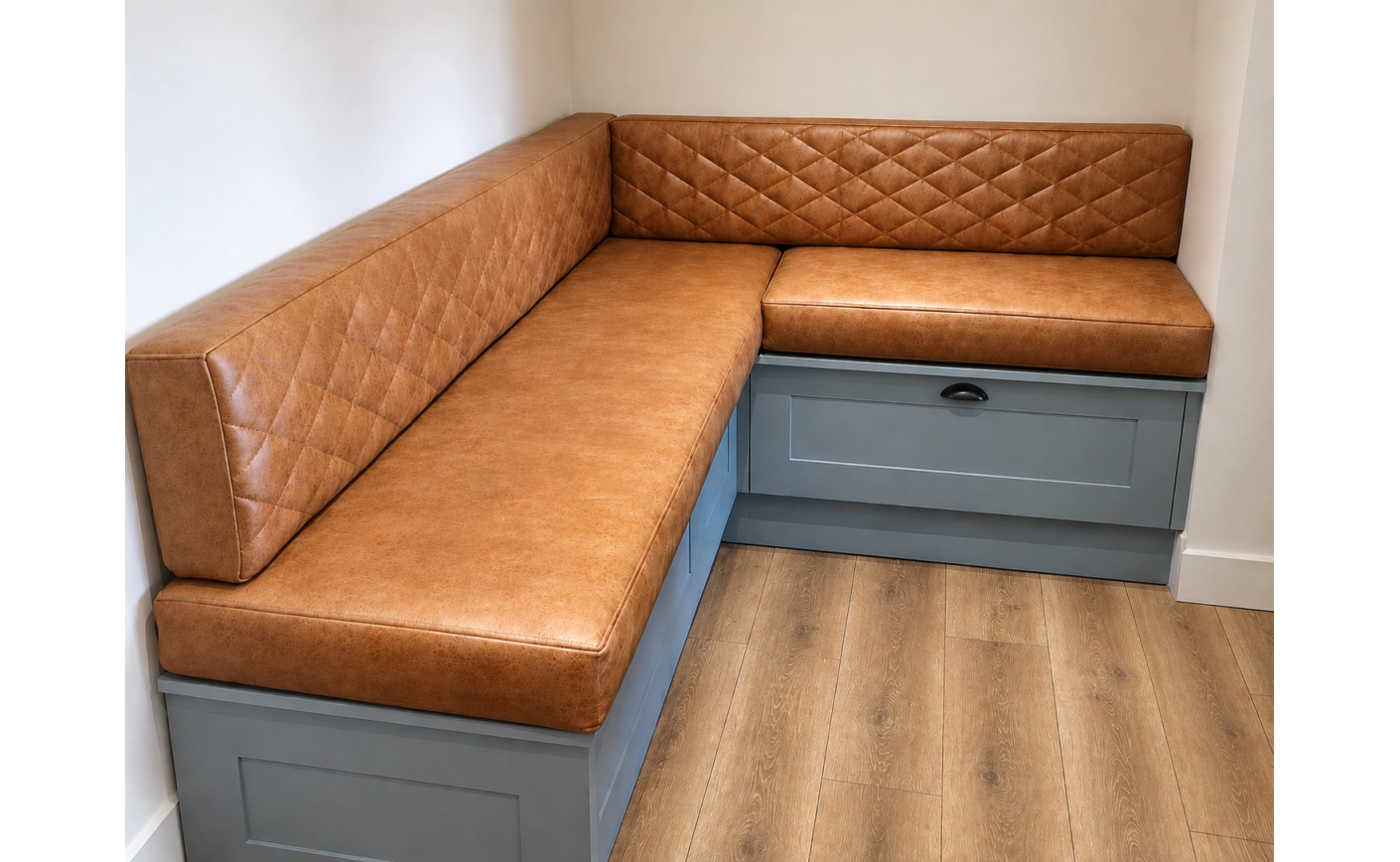
For a rectangular cushion, measure from side to side and front to back at the widest points. For an L-shaped, angled or curved seat, a simple sketch is invaluable. Mark each edge clearly, note where corners are square or rounded, and identify any cut-outs for posts, hinges or access panels.
Allow for practical details as well. If there is storage underneath, consider whether a thicker cushion will make lifting the lid difficult. If cushions sit against a wall, think about skirting boards and whether a small gap is needed. On a boat check the gunwale height and any cut out sections required for the dinette back rest cushions, check that adding generous back cushions will not reduce the usable seating depth too much.
It is often worth making a full-size paper or cardboard template for an irregular shape. Place it on the seat and trim it until it fits. This gives you a much clearer result than trying to explain a curved corner over the phone.
Choosing the right foam and cushion depth
Foam is where day-to-day comfort begins. Higher-density foam is generally a sensible choice for frequently used seat cushions because it offers support and helps the cushion hold its shape. Softer foams can feel appealing at first, but may not give enough support for a dining bench or regular family seating.
Thickness depends on the construction of the seat and the available headroom. A thinner cushion can be enough for a padded window perch, while a deeper cushion usually feels better for long periods of sitting. The key is to retain enough seat depth and keep the finished height comfortable. A cushion that raises the seat too high can leave feet dangling, while one that is too shallow can make standing up less comfortable.
For occasional sleeping spaces, comfort should be judged as part of the whole arrangement. Sofabed Barn understands that a compact room often has to work hard, so it is worth considering whether cushions need to complement a sofa bed, chair bed or dinette bed rather than act as a separate solution.
Fabric choices for real homes
Fabric should suit your household, not just a photograph. A light plain weave can brighten a small room, but it may show marks more readily in a busy family kitchen. A textured fabric can be forgiving and add warmth, though a heavily raised weave may be harder to clean if crumbs, pet hair or dust collect in it.
For custom cushions in a home with children, pets or regular guests, choose a fabric that feels practical as well as attractive. Mid-tone colours and subtle patterns tend to hide everyday marks better than very pale shades. Removable covers are useful where washing or professional cleaning may be needed, although care instructions will depend on the fabric selected.
In a narrowboat, consider the overall cabin environment. Fabrics that feel cosy are welcome, but the space can become warm or humid, so good ventilation and sensible care are still essential. Avoid assuming any upholstered cushion is fully waterproof unless it has specifically been made with a suitable material and construction.
Details that improve everyday use
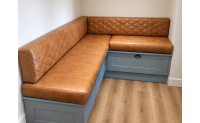
Small choices can make custom seating easier to live with. Zipped removable covers help with cleaning and future updates. Non-slip bases can reduce movement on smooth wood or vinyl seating platforms. Consider the style of cushion to suit your space including detailed diamond stitch pattern or a plain boxed finish for a cleaner, simpler look.
For large cushions, handles or a sensible lifting arrangement may be helpful if access to storage is needed regularly. If cushions need to stay in place on a boat or a fold-out bed base, ask about suitable fastening options. The best approach depends on how often the seating is rearranged and whether you need cushions to be fully removable.
Getting the look right in a small space
Custom does not have to mean complicated. In fact, matching cushions to the rest of the room can make a compact space feel calmer. Choose one main fabric for seat cushions, then bring in contrast through smaller back cushions, throws or curtains if you want more colour.
A single fitted bench cushion creates a clean, continuous line and is often a good choice for a window seat. Separate cushions can be easier to lift and turn, which may suit long dinettes or storage benches. There is no universal answer: one-piece designs look neat, while sectional cushions can be more manageable in everyday use.
Order fabric samples where possible and look at them in the room where the cushions will live. Daylight, overhead lighting and surrounding finishes can all change how a colour appears. It is a simple step that can prevent a fabric choice looking warmer, cooler or darker than expected.
A good custom cushion starts with a clear purpose and careful measuring, then follows through with the right foam, fabric and practical finishing details. When the seating fits well and feels comfortable, even the smallest corner can become a useful place to sit, share a meal or make room for another guest.