A small bedroom rarely has just one job. It may be your everyday sleeping space, a child’s room, a home office during the week or a spare room that needs to welcome guests at short notice. This compact bedroom furniture guide starts with the real question: how can the room stay comfortable to use without filling every inch with furniture?
The answer is not simply buying the smallest bed available. A room can feel more cramped when furniture is awkward to walk around, difficult to open or unable to store the things that would otherwise end up on the floor. The best compact furniture earns its place by doing more than one job well.
Start with the usable floor space
Before choosing a bed, sofa bed or wardrobe, measure the room at its narrowest points. Include radiator pipes, window ledges, door swings and the space needed to open drawers. A piece of furniture may fit the wall on paper but still make the room frustrating to live with.
Mark out the proposed footprint with masking tape or newspaper. For a sofa bed, mark both its closed size and its fully opened sleeping size. This simple check often makes the decision clearer than a floorplan alone, especially in box rooms, loft bedrooms and spare rooms with an inward-opening door.
Leave a sensible route from the door to the bed and allow enough clearance to make the bed, reach storage and open a window. There is no fixed measurement that suits every room, but if you need to turn sideways each time you enter, the layout needs another look.
Measure access as well as the bedroom
Compact furniture is useful only if it can get into the property. Check the width of hallways, stair turns, lift doors and the entrance to the room. This matters particularly in older terraces, flats with tight communal staircases and narrowboats.
Made-to-order furniture can be a good answer where standard sizes are too generous. It is still worth checking every access point before ordering, particularly when choosing a larger three-seat sofa bed or a model with fixed arms.
Choose the sleeping option around how it will be used
The right choice depends on who will sleep there and how often. An occasional guest room has different needs from a bedroom used every night.
For everyday sleeping, protect comfort first
If the room is used as a main bedroom, a proper bed frame with under-bed storage is often the most straightforward option. Choose a mattress depth and support level that suit the sleeper, then build the rest of the room around it. A storage bed can reduce the need for an additional chest of drawers, freeing valuable wall and floor space.
Ottoman-style lift-up bases offer a large hidden storage area, while drawer bases can be easier for daily access. The trade-off is clearance: drawers need room to pull out, whereas a lift-up base needs enough headroom and a clear area around the bed to open comfortably.
A smaller double bed can work well for one person or for occasional sharing, but it is not automatically the best value if two adults will use it every night. Saving 15 or 30 centimetres may make a major difference in a tight room, yet poor sleep is not a worthwhile compromise. Measure carefully and be realistic about how the bed will be used.
For a room that needs seating by day, consider a sofa bed
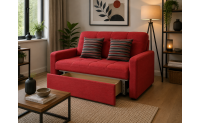
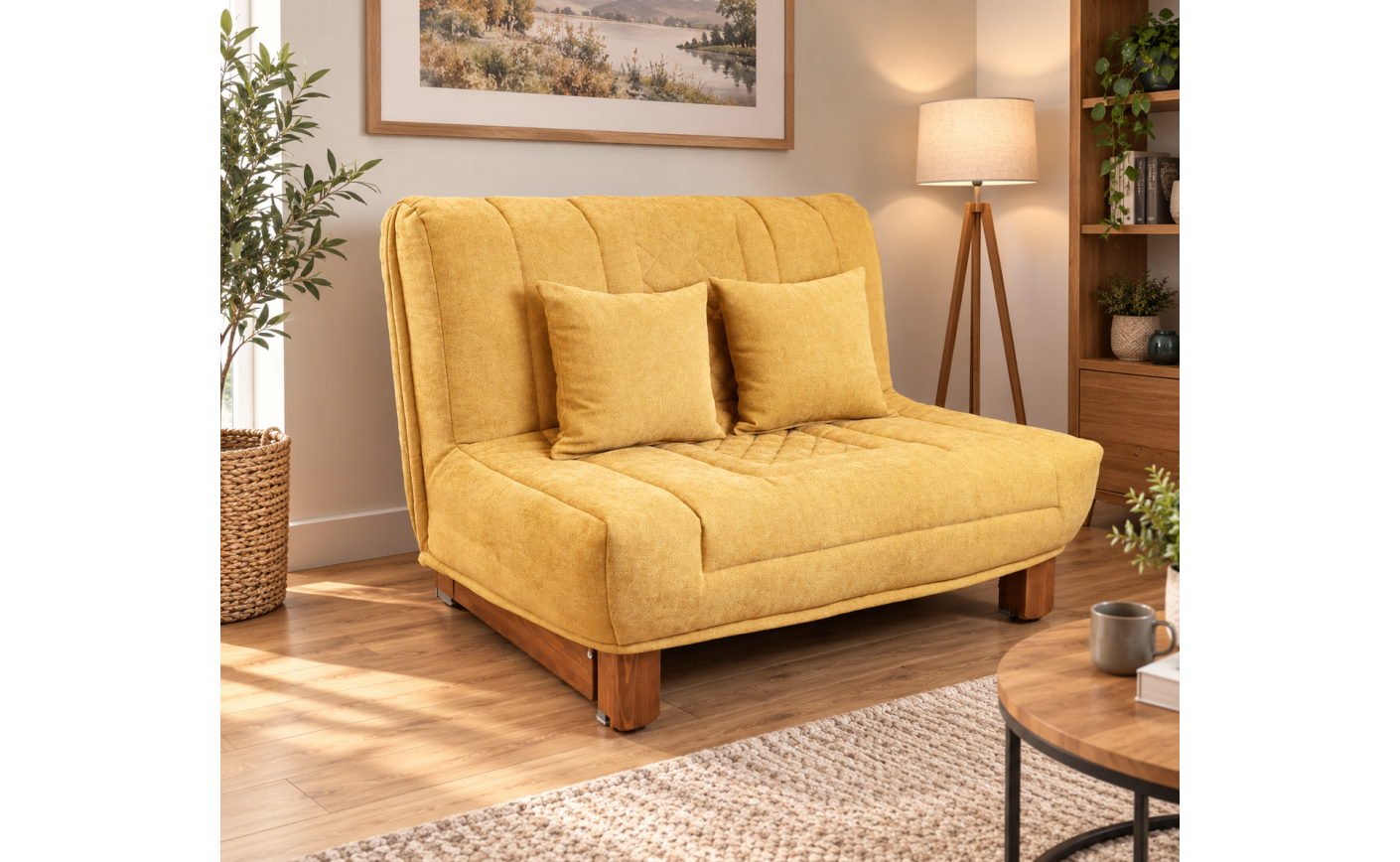
A sofa bed makes particular sense in a spare room, study or small lounge where a permanent bed would leave little room for anything else. During the day, it gives you useful seating. At night, it creates a proper place for visitors without inflating an air bed or moving furniture from room to room.
Look beyond the closed width. Check the sleeping length, mattress construction and conversion mechanism. A deep-quilted mattress and a supportive base will matter more to an overnight guest than a fashionable arm shape. Also consider who will open it. A straightforward pull-out or clic-clac mechanism is a practical choice if it will be used regularly.
Chair beds are especially helpful in the smallest rooms. They offer a comfortable single sleeping solution while taking up no more space than an armchair when folded. For a child’s bedroom, hobby room or narrow spare room, that can be the difference between having guest accommodation and having no room at all.
At Sofabed Barn, compact sofa beds are handmade to order with practical dimensions, fabric choices and selected storage options, helping households make the most of rooms that need to work harder.
Use storage that does not take over the room
Storage is what keeps a compact bedroom feeling calm after the furniture is in place. The goal is not to add cupboards to every wall. It is to give everyday items a sensible home without making the room visually heavy.
Start with the storage that can be built into the main furniture. Under-bed space is ideal for spare bedding, seasonal clothing, towels and less frequently used items. A sofa bed with storage can be equally useful in a guest room, keeping duvets and pillows close by rather than filling a separate cupboard.
Next, use height carefully. A tall, narrow wardrobe can hold more than a low, wide unit while preserving walking space. Shelving above a desk or beside the bed can take books, baskets and smaller belongings off the floor. Keep open shelves selective, though. Too many visible items can make even a well-planned room feel busy.
Where bedside space is limited, a slim bedside table with a drawer may be enough. Wall-mounted shelves can also work, but only if they are fitted securely and positioned so nobody catches a shoulder on them when getting in and out of bed.
Keep the layout flexible, not crowded
In a small room, furniture placement has a bigger effect than furniture quantity. Position the largest item first, usually the bed or sofa bed, then decide what genuinely needs to remain.
A bed against a wall can create useful central floor space, although it may be less convenient for two people sharing it. A sofa bed placed along the longest uninterrupted wall often gives the neatest daytime layout, provided there is room to open it. If the room doubles as an office, allow space for a chair to pull back before committing to a desk.
Avoid filling every gap simply because it is empty. A narrow strip of floor beside the bed may look underused, but it can make the room feel easier to move through. One well-chosen storage piece is often better than several small units that collect clutter.
Choose finishes that make the room easier to live with
Pale finishes can help a compact bedroom feel lighter, but they are not the only option. A darker upholstered sofa bed, for example, can be a practical choice in a family home where it will see regular use. What matters is balance: avoid pairing bulky furniture with lots of competing patterns, large handles and overfilled open shelving.
Fabric choice deserves practical thought too. Requesting samples lets you see colour and texture in the room’s own daylight, rather than relying on a screen. Consider how the fabric will cope with children, pets, guests and everyday use. A useful piece of furniture should not make you nervous every time someone sits on it.
Mirrors and good lighting can help the room feel more open, but they cannot fix a poor layout. Prioritise a comfortable bed, clear access and useful storage first. The decorative details work best once those basics are right.
Do not buy for a life you do not lead
It is tempting to plan a spare room around the idea of frequent visitors, a daily home office and a full dressing area all at once. Most small rooms cannot support every possible use without compromise. Decide which role matters most, then choose furniture that supports the second role without getting in the way of the first.
For some homes, that means a storage bed and a compact desk. For others, it means a comfortable sofa bed, a small wardrobe and space to sit with a cup of tea. A narrowboat or particularly tight room may call for custom cushions or tailored seating rather than standard bedroom furniture.
A compact bedroom should feel useful, not like a puzzle you have to solve each morning. Measure carefully, choose comfort where it counts and let each piece do a clear job. The result is a room that is ready for everyday life, overnight guests and everything in between.