A good dinette is more than a bench with a few cushions on top. It may be where you eat breakfast, work from home, host visitors or make up an occasional bed. This dinette cushion design guide helps you plan seating that feels comfortable every day, fits the available space properly and stands up to family life, guests and regular use.
Whether you are fitting out a narrowboat, updating a caravan, furnishing a compact kitchen or making better use of an awkward corner, the best result comes from getting the practical details right before choosing the fabric.
Start with how the dinette will be used
The first question is not which colour you prefer. It is how the seating needs to work. A dinette used for quick weekday meals can have a firmer, simpler cushion than one used for long evenings, remote working or sleeping guests. If it converts into a bed, the cushion depth, joins and overall layout become especially important.
Think about who will use it most. Young children, pets and frequent visitors all put different demands on the upholstery. A narrowboat dinette may need cushions that are easy to lift for access to storage, while a kitchen corner may need backs that offer enough support without taking too much room away from the table.
It also helps to be honest about daily habits. If the area doubles as a homework spot or a home office, back cushions need more support than decorative scatter cushions can provide. If meals are often lively or the dinette sits near a doorway, a forgiving, hard-wearing fabric will be a better long-term choice than a delicate finish.
Measure the base, not just the room
A cushion can only be as good as the base beneath it. Measure the full seat platform length and depth, then check whether the walls are square. In boats, older properties and handmade fitted furniture, they often are not. Take measurements at the front, middle and back of the seat, and note any curved corners, ledges, pipework or hinges.
Seat depth is one of the most common areas to get wrong. A shallow seat can be perfectly practical in a tight space, but it may need a supportive back cushion to remain comfortable. A deeper seat feels more relaxed, yet it can make a narrow dinette harder to get in and out of. For everyday dining, a balanced depth usually works better than trying to create the feel of a deep lounge sofa.
Allow for the finished cushion size, not just the foam. Fabric, piping and wrap add a little bulk, while removable covers need enough clearance to be taken off without scraping against walls or fixed tables. If the base has lift-up storage, check that the cushions can be moved easily and that their weight will not make access a chore.
Plan for tables, knees and walkways
A dinette should be comfortable when everyone is seated, not simply when it looks tidy in an empty room. Check the gap between the cushion edge and table, especially if the table is fixed. There needs to be enough room for knees, coats and the natural movement of sitting down and standing up.
In a narrowboat or small kitchen, every centimetre matters. However, squeezing in a deeper cushion or larger backrest can reduce the walkway enough to make the whole space feel frustrating. It is usually better to keep a clear route through the room and choose a well-shaped cushion with the right foam support.
Choose foam for comfort and purpose
Foam is where a dinette earns its keep. Very soft foam may feel inviting at first, but it can flatten quickly and make dining seating feel unsupportive. On the other hand, foam that is too firm can make a bench feel hard after half an hour.
For a dining area used most days, medium to firm, high-quality foam is often the sensible choice. It gives a supportive sit, holds its shape and helps cushions look neater over time. A layer of fibre wrap can soften the outline and make the cushion feel less abrupt without losing the support underneath.
If the dinette becomes a bed, consider the sleeping surface as a whole. Separate seat cushions can leave noticeable joins, particularly if they are different thicknesses or move apart overnight. A carefully planned arrangement with matching heights and a close fit will feel much better for occasional guests. It depends on the mechanism and layout, but this is worth deciding early rather than trying to solve it with throws and spare blankets later.
Back cushions need their own consideration. Loose fibre-filled backs feel relaxed and can be plumped into shape, but they need regular attention. Foam-backed cushions offer a tidier, more supportive finish and are often the easier option where space is limited.
Pick a fabric that suits real life
Fabric brings the design together, but it must also suit the setting. For family kitchens and frequently used dining areas, a durable woven upholstery fabric in a mid-tone or subtle texture is often a practical choice. It is more forgiving of everyday marks than pale plain fabric, while still giving the seating a warm, finished look.
On a boat, condensation and changing temperatures can be part of the picture. Choose upholstery intended for regular use, and avoid overly delicate materials that may be harder to maintain in a compact living environment. If cushions will be handled often to reach storage, a fabric with good abrasion resistance matters just as much as its appearance.
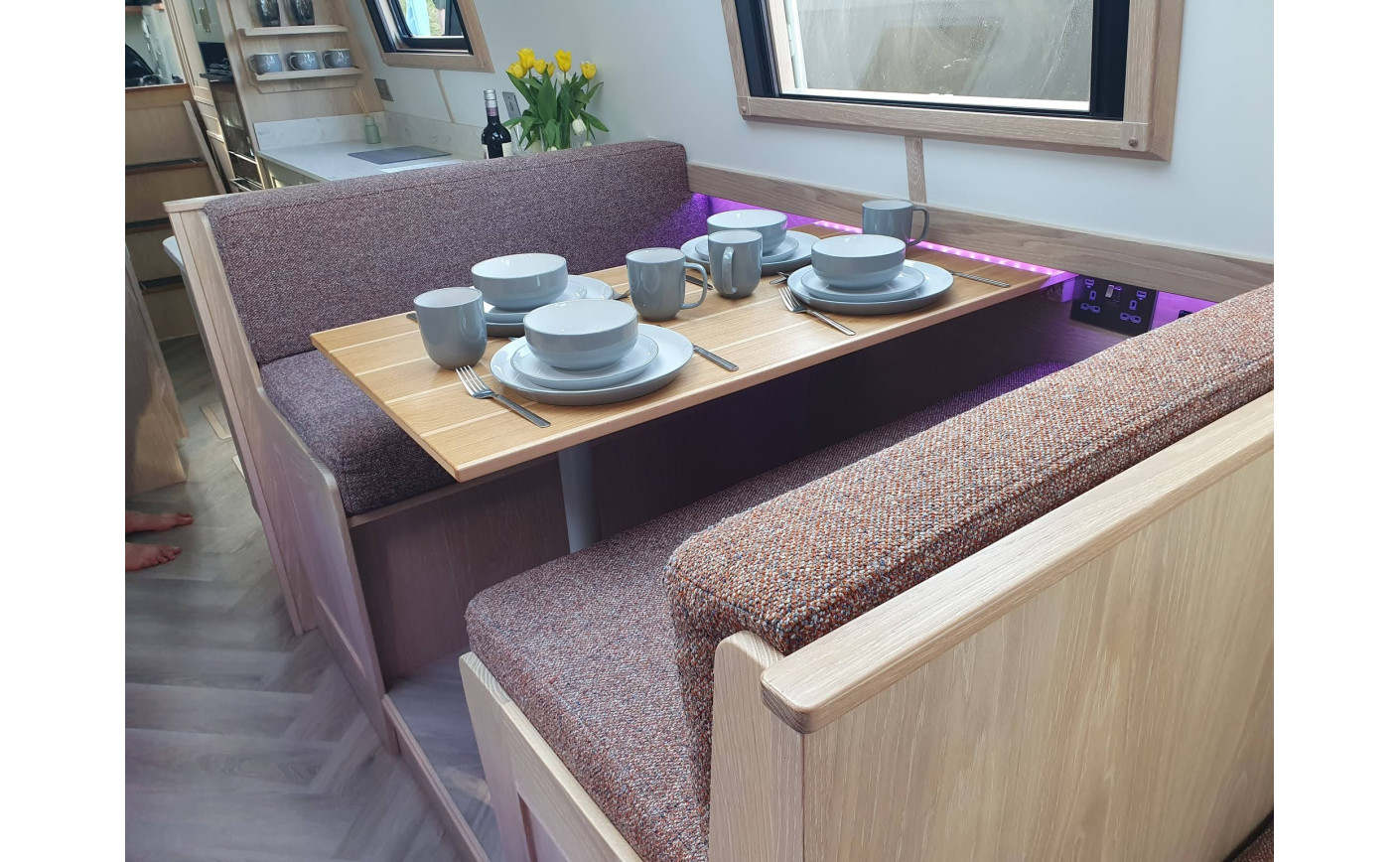
Colour can help a small space feel considered without making it feel closed in. Soft neutrals, muted greens, warm greys and textured blue tones tend to work well with timber, painted cabinetry and practical flooring. Darker shades hide wear well, although they can make a very compact dinette feel heavier. A middle ground, such as a flecked weave or small-scale texture, often offers the best of both.
Requesting fabric samples is a sensible step before committing. Look at them in the actual room, in daylight and under artificial light. Place them beside the table, cabinetry and flooring, and consider how they will look after years of use rather than only on the day they arrive.
Details that make cushions look made to measure
The simplest designs are often the most successful, particularly in compact interiors. A clean boxed edge gives a structured, tailored look and makes seat cushions sit neatly on a timber base. Piping can define the shape and add a traditional touch, but it may not suit every scheme or every sleeping arrangement.
For removable seat cushions, zip placement matters. A zip along the back edge is usually less visible and keeps the front looking smart. Where cushions form part of a bed, avoid bulky details where people are likely to lie. Smooth, close-fitting covers are generally more comfortable and easier to arrange.
Consider whether cushions should be attached or loose. Loose cushions are easier to remove for cleaning, storage access and airing out. Attached cushions stay in position better, which can be useful in a moving boat or busy family area. There is no single right answer - the practical routine of the household should decide it.
Do not overlook the base and storage
Even the best cushions cannot compensate for a flexing, uneven base. The platform should be strong, level and properly supported, particularly if it will carry several adults or turn into a bed. Ventilation is also useful where cushions sit on enclosed storage, helping reduce trapped moisture and keeping the seating fresher.
Storage beneath a dinette is one of the best ways to make a small room work harder. Before finalising the cushion arrangement, decide what will be stored there and how often it needs to be reached. Frequently used items call for easy lift-up access or drawers. Seasonal bedding can sit behind a less convenient panel.
At Sofabed Barn, made-to-order seating is planned around the way compact spaces are genuinely used, from practical storage access to fabric choices that suit the home rather than a showroom display.
A dinette cushion design guide for lasting comfort
The most successful dinette cushions do not ask you to choose between comfort and space-saving design. They are measured carefully, supported properly and upholstered in a fabric that can handle ordinary life. A little thought about the table height, seat depth, storage access and sleeping arrangement will make a far bigger difference than an elaborate trim.
Choose the layout that makes your day easier, then build the comfort around it. When a compact dinette is pleasant to sit on, simple to maintain and useful in more than one way, it becomes one of the hardest-working parts of the home.